|
|
3 |
EDITORIAL RULES, CONTINUED |
|
|
|
|
3.3 |
|
Titles and Names [1]
Included in this chapter
|
|
|
|

|
|
|
|
|
|
3.3.1 |
|
|
Term ID (required-default) |
|
|
|
|
|
3.3.1.1 |
|
|
Definition
Number identifying a title/name in CONA. |
|
|
|
|
|
3.3.1.2 |
|
|
Values
Numbers are system-generated in the following range: 1000000000
- 1999999999. |
|
|
|
|
| 3.3.1.3 |
|
|
Discussion
The system assigns unique, consecutive numbers to titles/names
as they are created or loaded in CONA.
The numeric IDs of deleted
terms are not re-used.
Each term in each subject record has a different term
ID. Homographs do not share the same term ID.
Note that if a term is deleted from one record, it cannot be added with the same Term ID to another record. In the new record, if the term is retyped, it will have a new Term ID. Given that this happens relatively rarely, it is not considered a priority to fix it at this time.
|
|
|
|
|
|
3.3.1.4 |
|
|
RULES for Term ID
|
|
|
|
|
3.3.1.4.1 |
|
|
Minimum Requirements
Required-default: Unique numeric IDs are generated by the system for each term. Term IDs may not be edited by the editors. |
|
|
|
|
|
|
|
3.3.2 |
|
|
Titles/Names (required) |
|
|
|
|
|
3.3.2.1 |
|
|
Definition
Titles, identifying phrases, or names given to a work of art, architecture, or material culture. For complex works, series, or collections, the title may refer to a discrete unit within the larger entity (a print from a series, a photograph in a collection, a panel from a fresco cycle, a building within a temple complex) or it may identify only the larger entity (series, collection, cycle) itself.
|
Venus and Cupid |
Portrait of Napoleon |
|
Adoration of the Magi |
Still Life with Flowers and Fruit |
|
L'Adoration des Mages |
Velvet Jacket |
|
Eight Scenes of the Xiao-Xiang Rivers |
Amish Tree of Life Quilt |
|
Site Plan for the Opera at the Place du Palais Royal, Paris |
Model for the Façade of San Lorenzo, Florence |
|
Abstract Composition |
Large Arch |
|
Chandelier |
Obelisk |
|
Lidded Bowl on a Stand |
Cane Back Rocking Chair |
|
Empire State Building |
Akashi-Kaikyō Bridge |
|
Hagia Sophia |
The Pantheon |
|
MS Ludwig XV |
Lawrence Alloway Papers |
|
|
|
|
|
|
3.3.2.2 |
|
|
Values
Free-text field; values are Unicode characters and numbers. Legacy data and characters outside Unicode (e.g., eszett as distinct from double-s) are represented with codes for diacritics. See discussion in Appendix A: Diacritics. |
|
|
|
|
|
3.3.2.3 |
|
|
Sources
Authoritative sources, with preference given to the repository of the work. |
|
|
|
|
|
3.3.2.4 |
|
|
Discussion
It is critical to always have a title or name by which to refer to the work in displays and other context. Therefore, the titles/names field is required, even when a work has no title per se. The field is also useful for retrieval, even though it is a free-text field.
This field records both titles and names that serve as titles. It records titles in the traditional Western sense, that is, descriptive phrases that refer to the iconographical subject or theme of the art work, such as Adoration of the Magi or Portrait of Thomas Jefferson.
It also records names of objects, architecture, or groups that do not have a title. Such titles/names could include the object type of the work (e.g., Ceramic Bowl) or the dedication or name of a building (e.g., Saint Paul's Cathedral). Titles and names may be referred to as simply "titles" in these guidelines, but in such cases both titles and names are intended.
One title for each work must be flagged as preferred for the record. The preferred title should be a concise descriptive title in English, if possible. As first options for the preferred title, use a recent title provided by the owning institution or a title supplied by the artist.
As a policy, we give precedence to owning institution's and artist's titles when choosing a preferred title. However, if these titles are not descriptive, they should be flagged as preferred, but a separate non-preferred descriptive title should be created and flagged Descriptive.
For the preferred title for movable works, generally use the title or name preferred by the repository or assigned by the artist, if applicable. Repositories typically defer to the artist's title, if one exists; thus there is rarely discrepancy. If they differ, prefer the title assigned by the repository, but include the artist's title as a variant title.
It is required to have a descriptive title for each work. Whenever possible, the preferred title should also be a descriptive title.
Displays: If the preferred title is not descriptive and in English, display both the record-preferred title and the descriptive title to end-users.
Exception: If the work is commonly known by a title, use that title as preferred, even if it is not descriptive. If for any reason the preferred title is not descriptive, a non-preferred descriptive title should be constructed by the cataloger and flagged as descriptive title using Other Flags.
Each record must have a title in English. If the preferred title is not in English, an English translation should be included, with Other Flags set to translated title and Language set to English, language preference for English set to preferred.
If the repository title for a movable work is not known, and for architecture, determine which title/name is most commonly used by consulting
standard art or architecture encyclopedia, textbooks, dictionaries, and authoritative
Web sites. See Sources for titles/names for a list of standard
sources.
If a title or name canot be found in standard sources, consult
specialized books, journal articles, and other published
sources.
If no title is found in published sources, and if the cataloger is authorized to do so, a title may be constructed.
Include any inscribed title, provided it is concise and clearly intended as a title, rather than as an explanatory inscription or description.
Homographs:
Homographs are common in cataloging art and architecture; many works have the same or similar titles.
In CONA, homographs are disambiguated in displays by including the title with other critical information that will uniquely identify the work to the end user. (The records are uniquely identified for technical purposes through the unique numeric Subject_ID in CONA.)
Below are examples of labels for works having homographic titles.
- Examples
- Madonna and Child; Saint Cecilia Master (Italian, active 1290-1320); ca. 1290/1295; tempera and gold leaf on panel; 85 x 66 cm (33 1/2 x 26 inches); J. Paul Getty Museum (Los Angeles, California); 2000.35.
- Madonna and Child; design by Alessandro Algardi (Italian, 1598–1654); executed mid-17th century; ivory; height: 17.8 cm (7 inches); Metropolitan Museum of Art (New York, New York); Bequest of Caroline W. Funk, in memory of her brother, George, 1969; 49.30.
Titles = Terms: In the data model, the Titles and Names in CONA are analogous to the Terms in AAT and the Names in ULAN and TGN.
|
|
|
|
|
|
3.3.2.5 |
|
|
RULES for Titles |
|
|
|
|
3.3.2.5.1 |
|
|
Minimum requirements
Required: Record at least one title or name for the work, group of works, collection, or series. If a work has been known by multiple titles or names, include them in repeating instances of this field. |
|
|
|
|
|
3.3.2.5.2 |
|
|
How to record the Titles or Names
- Warrant for titles
The record-preferred title must be found in at
least one authoritative source. The repository's records are considered an authoritative source.
List as many variant or alternate titles as have at least
one legitimate source.
For non-preferred titles, a constructed descriptive title may be created by an expert editor if necessary. All constructed titles should be flagged.
- Specificity and brevity
Titles should generally be concise and specific to the work. However, an alternate or variant title may be longer, for example, including more of the inscription as title.
|
|
|
|
|
|
3.3.2.5.2.1 |
|
|
Alphabet and diacritics
- For the record-preferred title
Use the Roman alphabet to record the record-preferred title. The record-preferred title should typically be in English, if possible. Alternate or variant titles may be in other alphabets and writing systems.
There may be a preferred title for each language.
Express titles in
Unicode.
- Transliterations
For alternate or variant titles in a language that is not written in the Roman
alphabet (e.g., Greek, Chinese, Cyrillic), record a transliteration of the title in the Roman alphabet as found in published sources.
Do not transliterate unless you are an expert. If you are a qualified and authorized expert, use pertinent
ISO transliteration standards where possible. Variant transliterations should be included, if known.
- Example
- Hagia Sophia
Ayasofya
Santa Sofia
Ἁγία Σοφία
|
|
|
|
|
|
3.3.2.5.2.2 |
|
|
Form and syntax
- In general, record titles and names in title case, not sentence case.
Title case in English: For titles in English, capitalize the first word and all nouns, pronouns, verbs, adverbs, adjectives, and subordinate conjunctions; use lower case for articles, coordinate conjunctions, and prepositions, unless they are the first word of the title. Capitalize proper names in the title.
- Examples
- Queen Dedes as Prajnaparamita
- Portrait of a Young Girl
- Petal, a Beagle
- Red-Figure Vase
- Asante Figurative Goldweight
- Sears Tower
- Virgin of the Rocks
Other languages: For titles in other languages, follow capitalization and other rules of that language or writing system. For titles derived from authoritative sources, follow the capitalization and punctuation of the source.
- Examples
- La vierge à l'hostie
- Noli me tangere
- Großer schlafender Satyr
- 牡丹
- Use mixed case
Titles and other information in the record should be expressed appropriately in mixed case.
Do not use all upper case.
If your
source lists the title in all caps, transcribe it in title case.
Do not use all lower case. If the title repeats the Work Type value, although the term may be in lower case in the Work Type field, record it in title case in the Titles/Names field (e.g., Work Type: bowl, but Titles/Names: Bowl).
Use all caps only for an abbreviation, codes, or other
rare case when the artist's title is explicitly expressed in all capitals (e.g., HALT!).
- Natural order and inverted order
Titles of works of art and architecture are rarely displayed in inverted order. However, if an authoritative source includes an inverted version of the preferred title, include it as an alternate or variant title.
Label the inverted title with the Display Flag set to
index. See Display Term Flag below.
- Initial articles
Avoid including initial articles in titles (e.g., Empire State Building, not The Empire State Building).
Exceptions occur when the article is commonly used for a given title, particularly when confusion could result if it were omitted (e.g., La Vierge, where the article is used to indicate the Virgin Mary, rather than a generic virgin).
- Abbreviations
For the preferred title/name, avoid abbreviations, initialisms,
acronyms, and codes.
Exceptions may occur when the abbreviation is better known
and more often used than the full term. Include variant titles having abbreviations.
- Examples
- Saint John the Baptist (preferred)
St. John the Baptist
- View of Mount Etna (preferred)
View of Mt. Etna
- Only one title per field
A single Titles/Names field should not contain multiple titles. With few exceptions, do not include paranthetical titles in the same field; record them in a second instance of the titles/names field as variant titles. For example, rather than record a paranthetical title Menelaus Blue Morpho (formerly Iridescent Blue Butterfly), include the second title as a former title in a separate field.
- Example
- Title: Menelaus Blue Morpho
Preferred flag: preferred Other flag: repository
Title: Iridescent Blue Butterfly
Preferred flag: variant Other flag: former title
Exception: For collective titles, the preferred method is to record the collective title in a separate field. However, if local practice dictates, it could happen that collective titles or former titles appear in a single title field. the title for the member of the series, parentheses may be used to designate the series title.
- Example
[when local practice dicates the use of a paranthetical title, a Japanese print]
- Title: Great Wave at Kanagawa (Thirty-Six Views of Mount Fuji)
[preferred best practice, the two titles appear in separate instances of the field, the collective title flagged appropriately]
- Title: Great Wave at Kanagawa
Preferred flag: preferred Other flag: repository
Title: Thirty-Six Views of Mount Fuji
Preferred flag: variant Other flag: series
In the example immediately above, note that the series title is flagged with the Other Flag field series. In addition, ideally, the record for the print's context would be cataloged separately and linked through Hierarchical Relationships or Associative Relationships.
|
|
|
|
|
3.3.2.5.3 |
|
|
Preferred flags for titles
For each title/name, there may be four types of preference. The preferences are not mutually exclusive. For example, one title may be preferred for the overall record, for the language English, and also for a given published source.
- record-preferred: the title preferred for the overall record. One title in the record is flagged as the overall record-preferred, as a default for displays. It is typically the same as the preferred English title.
- preferred for language: the title preferred for a given language. One title is flagged as preferred for each language.
- preferred for contributor: the title preferred for a given contributor. For each record, the contributor may have one preferred title.
- preferred for source: the title preferred for a given source. For each source there is one title preferred as the entry form title in that source.
|
|
|
|
|
|
3.3.2.5.4 |
|
|
Record-preferred titles or names
-
For the record-preferred title, as a general rule choose the title most often used for the work in scholarly authoritative sources, museum catalogs, and repository Web sites in the English language.
Repository title: For movable works, if the repository has provided a preferred title in the Roman alphabet, choose this as the record-preferred title; flag it as the repository title as well (Other Flag = repository). If the repository is a contributor, flag this name as preferred for contributor too (see below).
If the repository title is not in English, but the repository has provided a translation of their title in English, flag the English title as preferred for language (see below); if so agreed by the contributor, also choose the English title as the record-preferred title.
Artist's title: If the artist prefers a given title, particularly for living artists, the artist's title should typically also be the record-preferred title. Balance this priority with the preference of the repository, however, generally if there is an artist's title, the repository will also prefer this one.
Inscribed title: If a title is inscribed on the work, typically this is the record-preferred title. Balance this priority with the requirement to honor the preferences of the repository.
|
|
|
|
|
|
|
|
|
|
3.3.2.5.5 |
|
|
Include these types of titles
For each record, include the following types of titles, where pertinent. The types may correspond to the record-preferred title, or a variant title.
Choosing which title is record-preferred is a separate decision, discussed above.
- Descriptive title
Each CONA record should include a descriptive title in English. The descriptive title must convey to the user what the work is or what its subject is about. If the repository title, artist's title, inscribed title, or other title found in an authoritative source is descriptive, the cataloger need not construct one.
Also record the subject in Specfic Subject; Title is free text, not indexed for retrieval.
- Artist's titles
Include any titles assigned to the work by the creator.
- Repository titles
Include any titles assigned to the work by the owner of the work, usually the repository.
- Inscribed titles
Include any title that was applied to the work by the creator with the apparent purpose of giving it a title. If the inscribed title is not descriptive, it need not be the preferred title, but it should be included as a variant title.
For prints and books, record any title inscribed in the printing plate or on the title page (e.g., Cabinet des Beaux Arts). For books, it is customary to make the inscribed title record-preferred; however, if the inscribed title is not descriptive, a descriptive title should also be included.
The inscribed title may also be recorded with other inscriptions in the Inscriptions field. Record any long inscriptions in the Inscriptions field, not in the Titles/Names field.
- Popular titles
For works that are commonly known by a given title, include the popular title.
- Collective titles
Collective titles, which are the titles for broader contexts when cataloging items that are part of a volume, series, collection, or group, may be recorded in three possible ways.
Broader context in label: The title for the larger context may be included in a label for the item or other narrower context, without putting the title for the whole in the record for the part.
Collective title as non-preferred in record for the item: Alternatively, for collective titles, include them as a second title flagged with Title Type collective.
Collective title in parentheses: In most cases, avoid using parentheses in the titles/names field. However, if local cataloging practice dictates, the title for the larger whole may be included in the title for the part, sometimes enclosed in parentheses (e.g., Le Cheval Rayé (from the Les Anciennes Indes)).
- Titles for multiple-part works
For multiple-part works that are not a series or collection, if the parts of the work are not cataloged separately, include the titles of two or more parts, including the recto and verso, in the same title field (e.g., Two Standing Male Figures (vessel); A Reclining Female Figure (stand)).
- Titles for groups
If a group or collection is cataloged as a whole, but the parts are not cataloged separately, the title should be a general description of the group (e.g., Views of Paris and Chartres).
|
|
|
|
|
|
3.3.2.5.6 |
|
|
Non-preferred titles or names
-
Spelling variants
Include variant titles that differ in spelling, diacritics, capitalization,
or punctuation (e.g., View of West Lake, Essex is a spelling
variant for the preferred title View of Westlake, Essex).
- Synonyms
All titles must refer to the same work. In the case where scholars are uncertain if a historically documented title refers to a given extant work, make two records: one for the historically documented work and another for the known extant work. Link the two records using Related Works (associative relationships).
- Historical titles/names
Include historical titles, if warranted. Titles of works may change over time, due to changes in interpretation of the iconography of a movable work, ownership of a building which may be referenced in a title, or for other reasons.
- Examples
- Title: Portrait of a Halberdier (record-preferred)
Other flag: repository
Title: Portrait of Cosimo de' Medici
Other flag: former
- Title: Willis Tower (record-preferred)
Title: Sears Tower (variant)
Other flag: former
The Display Date field may be used as a note field to explain when the title was in use. If a Display Date is recorded, Start Date and End Date must also be recorded (these fields are not visible to end user, only for retrieval; see further discussion below, Dates for titles).
- Example
[in this example, the French title is most commonly used in English publications, thus it is the record-preferred title; the historical title is also included]
- Title: Le déjeuner sur l’herbe (record-preferred)
Historical flag: current
Other flag: repository Language: French
Title: Luncheon on the Grass
Language: English
Title: Le Bain (variant)
Historical flag: historical
Display Date: used in 1863, at the Salon des Refusés
Start: 1863 End: 1870
-
Misspellings
Published misspellings may be included as variant titles, provided the title is found in a major published source.
Historical titles: Include historical spellings.
Do not refer to historical titles as "misspellings,"
given that words or names may have been spelled differently in the past.
Inscribed spellings: Misspelled titles inscribed on the work should be included. Keep in mind that words may not have been spelled consistently in historical times, thus what you perceive as a misspelling should not be referred to as such. Flag inscribed titles as Other flag inscribed.
Archival spellings:
Include unique misspellings found in archival documents, as warranted. However, since such titles could impair the utility of the titles in general retrieval, flag them as Historical flag local use; implementors may omit titles so-flagged in general retrieval.
|
|
|
|
|
|
3.3.2.5.7 |
|
|
Language of the titles/names
- For the record-preferred title, use English, except when the title is commonly expressed in another language (e.g., Noli me tangere). In such cases, include an English title as an alternate or variant title, if possible (e.g., Mary Magdalene with the Risen Christ).
- Note that a language designation on a title indicates that this is the title used in a particular language. This does not necessarily designate the language of origin of the words in the title, particularly when the title contains proper names (e.g., the preferred title Mona Lisa in the example below).
- Example
- Mona Lisa (record-preferred, English-preferred, Italian-preferred, Spanish-preferred, German-preferred)
La Gioconda (Italian)
La Joconde (French-preferred)
Portrait de Lisa Gherardini, épouse de Francesco del Giocondo (French)
Portrait of Lisa Gherardini, wife of Francesco del Giocondo (English)
Das Porträt der Lisa del Giocondo (German)
Мона Ліза (Ukrainian)
モナ・リザ (Japanese)
蒙娜丽莎 (Chinese)
Monna Lisa (Italian) (historical)
Madonna Elisa (Italian) (historical)
|
|
|
|
|
|
3.3.2.5.8 |
|
|
Guide terms
- Guide Terms may be used to provide structure to the CONA hierarchy.
Do not add Guide Terms unless instructed to do so by your supervisor.
|
|
|
|
|
|
3.3.2.5.9 |
|
|
How to construct a title or name
A constructed title is created by the editor or other cataloger, rather
than being transcribed from a source or from an inscription on the object.
- When may a title be constructed?
Titles may be constructed only when authorized by your supervisor. Typically, titles may be constructed in the following situations:
- If the work has not been given a title by the repository or scholars.
- For architecture or utilitarian objects, which may not have titles per se.
- For works that have titles, provide a descriptive title if a repository title is not sufficiently descriptive for a movable work, a descriptive title may be created.
Caveat: As with all fields in CONA, do not enter data without published warrant or expertise. Do not construct a title unless you have authoritative warrant as to the subject matter, work type, or owners. Do not guess. Do not translate a title unless you are expert in both languages and you have been authorized to do so.
- What to include in a constructed title
If a title must be constructed, include the following types of content, as relevant:
- Iconography
Where appropriate, list named religious, mythological, literary, historical, or allegorical themes or subjects (e.g., Battle of Little Big Horn or Shiva and his Consorts).
- Proper names
Include named or anonymous figures, other works, or places depicted in the work, using proper names, if known (e.g., Plan and Elevation of the Houses of Parliament, London or Portrait of Abraham Lincoln ).
- Work type
For decorative works, utilitarian works, archaeological works, architecture, or groups of works that do not have a title per se, repeat the Work Type as title (e.g., Bannerstone), or include a descriptive phrase or name based on work types or a brief physical description the work (e.g., Silver Chocolate Pot).
The work type may be combined with the names of iconographical or other themes (e.g., Vessel with Zeus Chasing the Trojan Prince Ganymede).
- Owners
Where appropriate, record a title that includes the names of current or former owners, a current or former location, or other historical references (e.g., Bayeux Tapestry).
- Architecture
For architecture, record a descriptive name, a name that refers to the owner, a dedication (e.g., for a church), or a street address, as appropriate. Many buildings do not have names, in which case the title may refer to the work type (e.g., Amphitheater) or it may be a longer descriptive phrase (e.g., Case Study House No. 21).
- Architectural drawings
For architectural drawings, a descriptive title should emphasize the subject depicted, method of representation, and purpose of the group or item. As appropriate, include method of projection; purpose; stage of design process; document type; name, location, building type, parts of subject depicted; or style of subject depicted (e.g., Presentation drawing for the Lincoln Memorial). Information included in a title should also be a recorded under the appropriate categories elsewhere in the record as appropriate, in order to facilitate retrieval. Method of representation and Purpose should be indexed in Specific Subject or as Work Type.
- Manuscripts
The preferred title should be descriptive (e.g., Harley Golden Gospels). For manuscripts or other works, if appropriate, record an appellation based on a particular numbering system, such as a "shelfmark" (e.g., British Museum Harley 2788).
- Unknown titles
For works for which a title must be constructed, but where the work type and purpose are unknown, construct a descriptive title using any generic information that is available or clearly obvious (e.g., Abstract Composition or Landscape).
Do not use the word Untitled as a title unless the work has intentionally been called Untitled by the creator.
If there is no other title available, and if it is impossible for an editor to construct a title, enter the value undetermined in the title field, pending resolution at a later date.
- Source for constructed titles
The source for a constructed title is the following:
Brief Citation: Getty Vocabulary Program rules
Full Citation: Getty Vocabulary Program. Information warranted by Editorial Guidelines.
|
|
|
|
|
|
3.3.2.5.10 |
|
|
Editing contributed titles
Do not edit titles that have been loaded into VCS
from a contributor's database or the online contribution form,
except for minor edits to punctuation and typos.
If you add a date or a
source linked to the title, add the initials VP as an additional contributor
for the title and its related information.
If directed to do so by your supervisor, you may occasionally
delete contributed titles that are inappropriate for CONA.
|
|
|
|
|
|
|
|
3.3.3 |
|
|
Preferred Flag (required-default) |
|
|
|
|
|
3.3.3.1 |
|
|
Definition
Flag indicating whether or not the title is the preferred title
for the record. |
|
|
|
|
|
3.3.3.2 |
|
|
Values
The flags are controlled by a list in VCS.
|
|
|
|
|
|
3.3.3.3 |
|
|
Sources
Authoritative sources, with preference given to the repository of the work. |
|
|
|
|
|
3.3.3.4 |
|
|
Discussion
Every record must have one preferred title to use as a default
in displays. For further discussion, see Record-preferred titles or names above. |
|
|
|
|
|
3.3.3.5 |
|
|
RULES for Preferred Flag
|
|
|
|
|
3.3.3.5.1 |
|
|
Minimum requirements
Required: It is required to flag the title preferred for the record.
The title in sequence number 1 is automatically flagged preferred by the system. If this is not correct,
change the Preferred Flag to variant and alter the sequence numbers accordingly. |
|
|
|
|
|
|
|
3.3.4 |
|
|
Qualifier |
|
|
|
|
|
3.3.4.1 |
|
|
Definition
Word or phrase used primarily to distinguish between homographs in a thesaurus; currently used rarely in CONA. |
|
|
|
|
3.3.4.2 |
|
|
Values
Qualifier is a free-text field; use Unicode characters and numbers. |
|
|
|
|
3.3.4.3 |
|
|
Discussion
Qualifiers are only rarely used in CONA, given the large numbers of works having the same title. Title along with artist and other fields are concatenated to distinguish between homographs in CONA displays. |
|
|
|
|
|
3.3.4.4 |
|
|
RULES for Qualifier
|
|
|
|
|
3.3.4.4.1 |
|
|
Minimum requirements
Optional: Qualifiers are optional for CONA titles or names.
|
|
|
|
|
3.3.4.4.2 |
|
|
When to add a qualifier
- Homographs
With your supervisor's permission, use a qualifier to disambiguate homographs in CONA when other information in the label for two works is not sufficient to disambiguate them.
Currently qualifiers are used in the CONA only in rare cases. Check with your supervisor before adding a qualifier.
- Unidentified Named Works
Use a qualifier unidentified for
records in the facet Unidentified Named Works, which are works known from archival or other documentary evidence, but the true identification of which is uncertain or unknown.
|
|
|
|
|
|
|
|
3.3.5 |
|
|
Sequence Number (required-default) |
|
|
|
|
|
3.3.5.1 |
|
|
Definition
The display order number (or sort order number) indicating
the sequence of the title in relation to the other titles in the record. |
|
|
|
|
|
3.3.5.2 |
|
|
Values
Values are controlled, integers 1 through n. |
|
|
|
|
|
3.3.5.3 |
|
|
Discussion
Most records have only 1 to 5 titles. If you need
to add more than 15 titles, consult your supervisor. |
|
|
|
|
3.3.5.4 |
|
|
RULES for Sequence Number |
|
|
|
|
3.3.5.4.1 |
|
|
Minimum Requirements
Required-default: The sequence numbers are system-generated as titles are entered, but the numbers may be changed by the editor.
Values begin with 1 and are numbered sequentially; there is
no upper limit imposed by the system. |
|
|
|
|
|
3.3.5.4.2 |
|
|
How to sort titles and names
- Number the titles in sequence. Do not skip numbers. Arrange
the titles in a logical order.
- The title in sequence number 1 must be the overall record default
Preferred title.
- After the Preferred title, list other titles grouped by language or another logical order.
- Position all historical titles at the bottom of the sequence, after all of the current titles.
|
|
|
|
|
|
|
|
3.3.6 |
|
|
Historical Flag (required-default) |
|
|
|
|
|
3.3.6.1 |
|
|
Definition
Flag indicating the historical status of the title. |
|
|
|
|
|
3.3.6.2 |
|
|
Values
Values are derived from a controlled list:
current
historical
both
not applicable
local use
|
|
|
|
|
|
3.3.6.3 |
|
|
Sources
Editors should use standard, authoritative sources in determining
whether or not a title is historical or currently in use. The same authoritative sources that are appropriate
for the rest of the record may be used, including data from the repostory of the work. |
|
|
|
|
3.3.6.4 |
|
|
RULES for Historical Flag |
|
|
|
|
3.3.6.4.1 |
|
|
Minimum Requirements
Required-default: It is required to have a historical flag for the titles. Change the default setting if it is not appropriate. |
|
|
|
|
|
3.3.6.4.2 |
|
|
How to flag Historical titles or names
Choose the value for Historical flag based on the definitions below.
- Current: The default flag is Current. Most titles in CONA will be current. If the title is currently in
use, the flag should be set to Current. Titles found in catalogs and reference books are almost always Current, unless otherwise
indicated.
- Historical: If the title was used in the past but
is not used currently, set the flag to Historical.
- Both: A title may occasionally be Both historical
and current. If you feel
you have such a situation, consult with your supervisor.
- N/A: Not applicable. Use when a historical designation is inappropriate or unknown.
|
|
|
|
|
|
|
|
3.3.7 |
|
|
Term Type (required-default) |
|
|
|
|
|
3.3.7.1 |
|
|
Definition
Indicates the type of title, described with specialized terminology
used in thesauri. Currently not used in CONA. |
|
|
|
|
|
3.3.7.2 |
|
|
Values
Values in CONA are the following:
undetermined
not applicable.
|
|
|
|
|
|
3.3.7.3 |
|
|
RULES for Term Type
|
|
|
|
|
3.3.7.3.1 |
|
|
Minimum Requirements
Required-Default: The default setting in CONA for Term Type is N/A. As of this writing, term type is not used to reflect Descriptors, Alternate Descriptors, and Used For Terms. However, these values may be implemented in the future. |
|
|
|
|
|
|
3.3.8 |
|
|
Part of Speech (required-default) |
| |
|
|
|
3.3.8.1 |
|
|
Definition
Indicates the category into which the title would be placed relative to its normal function in a grammatical context. |
| |
|
|
|
3.3.8.2 |
|
|
Values
Values are derived from a controlled list:
undetermined
noun
adjectival/possessive
phrase
not applicable
|
| |
|
|
|
3.3.8.3 |
|
|
RULES for Part of Speech
|
| |
|
|
|
3.3.8.3.1 |
|
|
Minimum Requirements
Required-default: The default is set to Undetermined. As time allows in editorial work and in future data loads, the flag should be set to an appropriate value. |
| |
|
|
|
3.3.8.3.2 |
|
|
How to choose Part of Speech
Choose an appropriate part of speech, based on the definitions below:
- Undetermined: Default setting for this flag, as of this writing.
- Noun: Use for titles that are proper nouns (simple proper names) or common nouns (generic terms) (e.g., George Washington or Bannerstone).
- Phrase: Use for phrases that serve as titles. Most titles are phrases (e.g., Adoration of the Magi or Reclining Buddha).
- Adjectival/possssesive: May be used when authorized and supported by contributor data, for possessive form of the title (e.g., Mona Lisa's).
- Not applicable: Use for facet names, guide terms, and other designations for levels of the hierarchy in CONA.
|
| |
|
|
|
|
|
3.3.9 |
|
|
Vernacular Flag (required-default) |
|
|
|
|
|
3.3.9.1 |
|
|
Definition
Flag indicating whether or not the title is in the "vernacular"
language. Most terms in the AAT are set to Undetermined. |
|
|
|
|
|
3.3.9.2 |
|
|
Values
Values are derived from a controlled list:
vernacular
other
undetermined
|
| |
|
|
|
3.3.9.3 |
|
|
RULES for Vernacular Flag |
|
|
|
|
|
3.3.9.3.1 |
|
|
Minimum Requirements
Required-default: A value is required, althoug as of this writing, the Vernacular flag in CONA is usually set to Undetermined based on the data contributions.
|
|
|
|
|
3.3.9.3.2 |
|
|
How to choose the Vernacular Flag
If time allows in editorial work and if authorized by your supervisor, and in future loads, the Vernacular flag may be set appropriately. Choose the value based on the definitions below.
- Vernacular: Use if the title or name is in the language of the repository or the original language of the artist.
- Other: Use for titles and names that do not meet the criterial for Vernacular.
- Undetermined: This is the default setting for
CONA titles. As of this writing, this is the setting for most titles or names in the CONA data.
|
|
|
|
|
|
|
|
|
|
|
|
3.3.10 |
|
|
Language for titles/names (required-default) |
|
|
|
|
|
3.3.10.1 |
|
|
Definition
The language of the title or name. |
|
|
|
|
3.3.10.2 |
|
|
Values
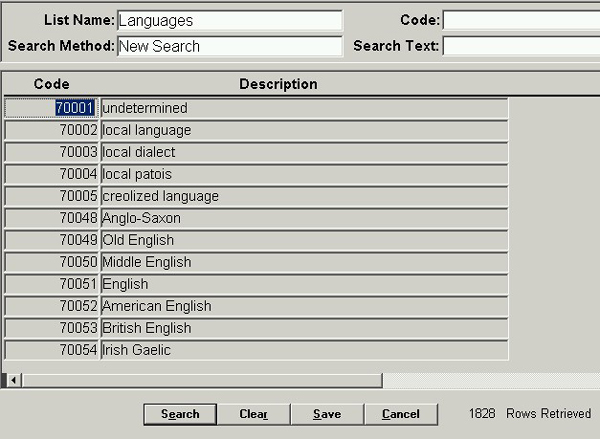
As of this writing, values for languages are controlled by an extensible list, mapped to the AAT language hierarchy. In the future, the language will be linked directly to the AAT.
|
|
|
|
|
|
|
|
3.3.10.3 |
|
|
Sources
The sources indicating the language of a given title or name may include authoritative published sources, with preference given to the repository of the object. Editors should not guess what is the language for a title.
Regarding sources for languages, see Appendix E: Languages. |
|
|
|
|
3.3.10.4 |
|
|
Discussion
The language of the title or name should be recorded, when known. The addition of titles in various languages improves retrieval of the work record; labeling the language allows for identification of titles for display by users preferring one language over another.
In VCS, there are three language fields visible: the language name plus its code, coming from the authority, plus a flag for the preferred status of this language.
Preferred Flag for Language, discussed below, indicates whether or not this title is the preferred
way to refer to the work in that language. Qualifier, Term Type, Part of Speech, and Language Status are also associated with the language. |
|
|
|
|
3.3.10.6 |
|
|
RULES for Language of Title |
|
|
|
|
3.3.10.5.1 |
|
|
Minimum Requirements
Required-default: A value is recorded for this field. The default, when you do not know the language, should be undetermined. |
|
|
|
|
|
3.3.10.5.2 |
|
|
How to label the language of the Title
- The flag is by default set to undetermined. Change the flag to indicate the appropriate language for every title, as far as your
expertise, time, and editorial priorities allow.
- What does a language designation mean?
Note that the language designation means that this is the title used in the language indictated. It does not necessarily mean the words of the title are in that language. For example, the title Noli me tangere comprises Latin words; however, this title is used in English texts and references in other languages as well. Thus, it is flagged as Language = English.
- Variations within a language
If the same language is used in multiple nations, but the words of the title are spelled differently in these nations, include both spellings and flag appropriately.
For example, flag both the American
English and British English spellings, if they
differ. (The rcord-preferred title should be the American English
spelling.) If American and British spellings are identical,
flag the title simply English.
- Other languages
For titles in other languages, flag them with the name of the correct
language. Note that the title may be spelled the same in
multiple languages, and thus there may be multiple languages
linked to one title.
- Uncertainty
Label a language only if your source indicates what it is.
Do not guess.
If you are uncertain regarding a specific language, use
the broader designation. For example, if your source does
not specify if the title is Ancient Latin, Medieval Latin,
or Liturgical Latin, but you are positive that it
is Latin, use the more general designation Latin.
If you do not know the language, leave the flag set to undetermined.
- Transliterated titles
For many languages in the language list, there are different designations for the transliterated language and the language expressed in its native alphabet, logography, syllabary, or other writing system. Choose the designation for transliteration when appropriate.
For example, if the title is in Chinese characters, but you are not sure of the type of script, use the more general 72550/Chinese designation. If you know that the script is traditional script rather than simplified, use the more specific 72551/Chinese (traditional).
Likewise, if you are entering a transliterated Chinese title, but you do not know the transliteration method, use the language designation 72581/Chinese (transliterated). If you know that it is a Pinyin transliteration, use the more specific 72583/Chinese (transliterated Pinyin).
- When no language is applicable
For numeric codes or other coded designations used as a title, do not flag a language; set the flag to not applicable.
|
|
|
|
|
|
|
|
|
|
|
|
3.3.11 |
|
|
Preferred Flag for Language (required-default) |
|
|
|
|
|
3.3.11.1 |
|
|
Definition
Flag designating whether or not the title or name is preferred in that
language. |
|
|
|
|
|
3.3.11.2 |
|
|
Values
Values are derived from a controlled list:
preferred
non-peferred
undetermined
|
|
|
|
|
3.3.11.3 |
|
|
RULES for Preferred Flag |
|
|
|
|
3.3.11.3.1 |
|
|
Minimum Requirements
Required-default: Record an appropriate value from the controlled list indicating if the title or name is preferred or variant in a given language for this iconographical subject. |
|
|
|
|
|
3.3.11.3.2 |
|
|
How to flag the Preferred Flag for Language
Flag the preference of the title for a given language based on the following definitions.
- Preferred: If the repository or authoritative sources indicate the title is preferred for a given language, use preferred. There may be only one preferred title per language.
- Non-preferred: If
you have enough information to know a title is non-preferred for a given language, use non-preferred for that language.
- Undetermined: If information is not available regarding whether or not the title is preferred in a given language, set the flag to undetermined.
|
| |
|
|
|
|
|
3.3.12 |
|
|
Language Status (required-default) |
| |
|
|
|
3.3.12.1 |
|
|
Definition
Indicates if the title is borrowed from another language. |
| |
|
|
|
3.3.12.2 |
|
|
Values
Values are derived from a controlled list:
undetermined
not applicable
loan term title
literal translation
translation N/A
|
| |
|
|
|
3.3.12.3 |
|
|
Sources
Use authoritative reference sources, with priority given to the repository of the work. |
| |
|
|
|
3.3.12.4 |
|
|
Discussion
This flag is used to indicate that a title in one language is not actually composed of words in that language (e.g., Noli me tangere is the title used in English, but is borrowed from a Latin phrase). |
| |
|
|
|
3.3.12.5 |
|
|
RULES for Language Status |
| |
|
|
|
3.3.12.5.1 |
|
|
Minimum Requirements
Required-default: The default is undetermined. If this is not correct, change the value as indicated below. |
| |
|
|
|
3.3.12.5.2 |
|
|
How to flag Language Status
Flag the language status based on the following definitions:
- undetermined: Default value, when it is has not been determined if the title is composed of loan words or not.
- not applicable: For guide terms and other levels of the hierarchy.
- loan term title: Use when the title is flagged in one language, but the words of the title are derived from another language.
- literal translation: Use when there is no literary warrant for a translation of the title into a given language, but the title has been translated literally from the original language or another language.
- translation N/A: Use when the title is retained from one language into the target language, even though there is no literary warrant for its use as a loan title in the target language.
- Uncertainty
When in doubt, do not flag the title as a loaned title.
|
|
|
|
|
|
|
3.3.13 |
|
|
Contributor for Titles/Names (required-default) |
|
|
|
|
|
3.3.13.1 |
|
|
Definition
A reference to the institution or project that contributed
the title or name. |
|
|
|
|
|
3.3.13.2 |
|
|
Values
Controlled by a link to a file of controlled terminology;
the list changes as new contributors are added.
|
|
|
|
|
|
|
|
3.3.13.3 |
|
|
Sources
The identification of the contributor for a title should be derived from data as it is loaded. Generally, any record added by hand to VCS has the contributor VP (Vocabulary Program).
|
|
|
|
|
|
3.3.13.4 |
|
|
Discussion
The Brief Name, which is an acronym, initials, or abbreviated term of
the institution, appears in the place record. The Full Name
is linked to the Brief Name in displays for the end users.
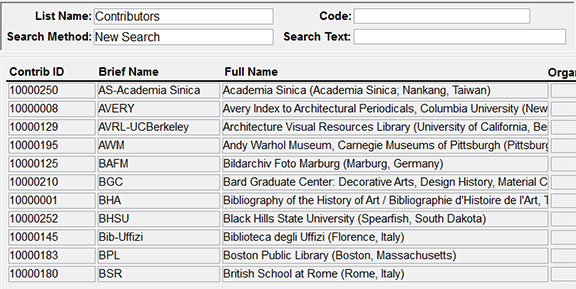
In the controlled file for contributors' names, the following fields are included. In an associated file, not released to the public, contact information and details about contributions and licenses are recorded.
- Contributor ID: Unique numeric identifier for the contributor within the Getty Vocabularies.
-
Brief Name: An acronym, initials, or abbreviated name
of the institution.
- Full Name: A full version of the name of the contributing
institution or project.
|
|
|
|
|
3.3.13.5 |
|
|
RULES for Contributor for Title |
|
|
|
|
3.3.13.5.1 |
|
|
Minimum Requirements
Required-default: It is required for each term to have a contributor. For new records added in VCS, the default is VP. |
|
|
|
|
|
3.3.13.5.2 |
|
|
How to choose the contributor
The following are rules for assigning a contributor to
a title. See Appendix D: Contributors for rules regarding the recording of contributor names in the contributor authority.
- Default is VP
The default Contributor is VP (Vocabulary Program).
Editors may change contributors' initials only in very rare
cases. If you feel it is necessary to change a link from
one contributor to another, consult with your supervisor.
- Contributor for hand-entered data
If a vocabulary program editor is adding data by hand, even if the data was
given in a printout or other form by an institution
or project for entry into VCS, the contributor
for the title should usually be VP (not the contributor's acronym), because the Vocabulary Program
is actually entering the data (and thus some amount of interpretation
is going on). To give credit to the contributing project,
for the Source of the title, link to a citation for
the contributing institution or project.
In only the rarest of cases will a VP editor link a title to a contributor other than VP. If you feel this is appropriate, consult first with your supervisor.
- Contributors for loaded data
For data that is loaded into VCS, contributors' names
will be linked to the title and other data in the record
at the time when the data is loaded into VCS; the link
to the contributors' acronym in such cases virtually never
needs to be changed.
|
|
|
|
|
|
|
|
3.3.14 |
|
|
Preferred Flag for Contributor (required-default) |
|
|
|
|
|
3.3.14.1 |
|
|
Definition
Flag indicating whether the title or name is the one preferred by the
contributor or a non-preferred title or name from the contributor. |
|
|
|
|
|
3.3.14.2 |
|
|
Values
The values are derived from a controlled list: |
|
|
|
|
3.3.14.3 |
|
|
Sources
Use information directly from the contributing institution, or authorized publications from the institution. |
|
|
|
|
|
3.3.14.4 |
|
|
Discussion
For the title preferred for the given contributor, flag the title agreed upon by the contributor.
Titles added to a new VCS record in sequence number one are flagged Preferred for the
contributor VP.
Other contributors' data is loaded with the appropriate name linked to their titles. |
|
|
|
|
3.3.14.5 |
|
|
RULES for Preferred Flag for Contributor |
|
|
|
|
3.3.14.5.1 |
|
|
Minimum Requirements
Required-default: The default value is non-preferred. Flag the title as preferred for the contributor if warranted. |
|
|
|
|
|
3.3.14.5.2 |
|
|
How to choose preferred flag for Contributor
- For contributed data
For contributed data, the flag is set when the data is
loaded. Editors rarely have to change this flag for data
loaded from contributors. If you feel you should do so,
please consult with your supervisor. Note that there may
be one and only one preferred title for each contributor
per record.
- For titles or names added by VP
Flag one and only one VP-preferred title for each record.
Each contributor may have only one preferred title per
record.
The VP-preferred title should be the same title as the
overall Preferred term (in English) for
the record.
The default flag for a new variant title in VCS is Non-preferred.
If you are adding the preferred title for VP, change the
flag to Preferred (which swaps the term to the Preferred
position, sequence no. 1).
|
|
|
|
|
|
|
|
|
|
|
|
3.3.15 |
|
|
Sources for Titles/Names (required) |
|
|
|
|
|
3.3.15.1 |
|
|
Definition
A reference to the sources used as warrant for the title or name, typically
a published source. |
|
|
|
|
|
3.3.15.2 |
|
|
Values
Sources for the citations are the title pages of the bibliographic works, Web pages, etc.
- Values are controlled by the Sources file in VCS. A source
must be added to the Source file in order to be used in
(linked to) the Subject (place) record. For a discussion
of how to add sources to the Sources file, see Appendix
C: Sources.
- For a discussion of which sources are considered authoritative
as warrant for specific types of titles, see the discussion of titles above.
|
|
|
|
|
|
|
3.3.15.3 |
|
|
Sources
Sources for titles and names of the work are authoritative, scholarly and general published bibliographic works, with preference given to information from the repository.
|
|
|
|
|
|
3.3.15.4 |
|
|
Discussion
This section discusses both which sources should be preferred for the CONA title or name and other information, and how to format the references to the sources
The sources in a CONA work record are linked to Titles/Names, the Descriptive Note, and the Subject overall. |
|
|
|
|
3.3.15.5 |
|
|
RULES for Sources of Titles or Names |
|
|
|
|
3.3.15.5.1 |
|
|
Minimum Requirements
Required: It is required to cite sources used for the title. |
|
|
|
|
|
3.3.15.5.2 |
|
|
Basics of sources for titles or names
- Sources are required
The record-preferred title must have at least one authoritative source. For movable objects, this is ideally official documentation produced by the repository.
If sources other than the repository are used, three sources are required to establish that this is the title most commonly used in authoritative sources to refer to the work.
Non-preferred titles must have sources, with the exception of constructed titles (discussed below)
- Transcribe titles or names accurately
Transcribe the title as found in an authoritative source.
In order to be stated as having derived from a source, the title or name should have been transcribed precisely, retaining the diacritics, capitalization, and punctuation of the source.
- Exceptions: There are a few exceptions, where the formatting of the source is specialized, and contradicts form and syntax rules for CONA titles or names.
- Page field
In the Page Field, it is required to cite the page number,
volume, date of accessing a Web site, or other appropriate
indication of the specific location where the title was found
in the source.
- Edition
If there are multiple editions or multiple publication
dates for a source, link to the specific edition, with the correct year of publication, that you
are using.
|
|
|
|
|
|
3.3.15.5.3 |
|
|
Preferred sources for titles or names
- Prefer the most authoritative, up-to-date sources available, which may include the following, arranged according to preference.
- For movable works, data contributed directly from the repository of the work.
- Web sites, databases, and published catalogs of the repository.
- Grove Art Online and other art dictionaries and encyclopedia.
- Text books, art encyclopedia, and specialized books on a given artist or period of art history.
- Inscriptions on art objects.
- Source for constructed titles
Occasionally, titles are constructed by the Vocabulary Program. The source for
constructed titles should be the following:
Brief Citation: Getty Vocabulary Program rules
Full Citation: Getty Vocabulary Program. Term warranted by CONA Editorial Guidelines.
- Source for titles from a database
If titles are loaded from a contributor's database, special
citations are used to refer to the database. Generally,
these citations are attached to titles when the records are
loaded, thus the editors need not be concerned with them.
However, if you are entering titles by hand that have been
derived from a contributors' database, consult with your
supervisor regarding which citation to use to refer to the
database. (Note that the Contributor in this situation will
be VP, not the contributing project's acronym. See Contributor
above.)
- Example
- Brief Citation: Getty Museum, Authority file (2003-)
Full Citation: J. Paul Getty Museum. Authority file [unpublished database, TMS]. Los Angeles, CA, 2003-.
- Contributor: VP
|
|
|
|
|
3.3.15.5.4 |
|
|
Citing Sources
- For rules for constructing the Brief Citation and the Full Citation,
see Appendix C: Sources.
The Brief Citation
should be a short, unambiguous reference to the source. The Full
Citation is full reference to the published or unpublished
work, including author, title, place of publication, publisher, and year of publication.
|
|
|
|
|
|
|
|
3.3.16 |
|
|
Page Number for title Source (required)
|
459 |
12-34 |
title page |
|
276 ff. |
211-213 |
inscription |
|
6:97 |
7:89 ff. |
folio 21, verso |
|
|
|
|
|
|
3.3.16.1 |
|
|
Definition
A reference to the volume (if applicable) and page number
where the title was found in the source. It may also include
other information describing the precise place in the source
where the term was found (e.g., title of an article or a URL
for an online source). |
|
|
|
|
|
3.3.16.2 |
|
|
Values
Free-text field; values are Unicode characters and numbers. Legacy data and characters outside Unicode (e.g., eszett as distinct from double-s) are represented with codes for diacritics. See discussion in Appendix A: Diacritics. |
|
|
|
|
|
3.3.16.3 |
|
|
Discussion
Page Numbers are also discussed under Page Number for Subject
Source and Page Number for Descriptive/Scope Note Source. |
|
|
|
|
3.3.16.4 |
|
|
RULES for Page Number |
|
|
|
|
|
3.3.16.4.1 |
|
|
Minimum Requirement
Required: Although VCS will allow you to save a record without
page numbers, it is required to record them when known.
|
|
|
|
|
|
3.3.16.4.2 |
|
|
How to cite references in the Page Number field
The Page Number field contains references to page numbers, but also other references to specific locations in the source where the title or name was found.
For rules regarding citing the page or other references, see Appendix C: Citations: Pages.
- Examples
- Brief Citation: Janson, History of Art (1997)
Full Citation: Janson, H. W., and Janson, Anthony F. History of Art. 5th revised. New York: Harry N. Abrams, Inc., 1997.
Page: 150-152
Brief Citation: Xydis, Chancel Barrier of Hagia Sophia (1947)
Full Citation: Xydis, Stephen G. "The Chancel Barrier, Solea, and Ambo of Hagia Sophia." Art Bulletin 29/1 (Mar. 1947): 1-24.
Page: title
Brief Citation: LC Subject Authority Headings [online] (2002-)
Full Citation: "Subject Authority Headings." Library of Congress Authorities [online]. 2002-. http://authorities.loc.gov/ (17 March 2003).
Page: n 95048956; accessed 10 August 2010
Brief Citation: New Catholic Encyclopedia (1967-1979)
Full Citation: Catholic University of America.
New Catholic Encyclopedia. New York: Publishers Guild
in association with McGraw-Hill Book Co., 1967-1979.
17 vols.
Page: 3:568
Brief Citation: Derby & Co., Furniture Catalog (1915)
Full Citation: erby and Company. Furniture Catalog. Boston, Mass.: Derby & Co., 1915.
Page: plate xvi
Brief Citation: Cotter, Buddhas of Bamiyan,
New York Times (2001)
Full Citation: Cotter, Holland. "Buddhas
of Bamiyan: Keys to Asian History." New York Times
(3 March 2001), A3.
Page:
[for a hard copy source, volume and page number ]
- Brief Citation: New Encyclopedia Britannica
(1988)
Full Citation: New Encyclop$70aedia Britannica.
15th ed. 1988 printing. 29 vols. Chicago: Encyclopedia
Britannica Inc., 1988.
Page: 5:303
[for an online source]
- Brief Citation: Encyclopedia Britannica Online
(2002-)
Full Citation: Encyclop$70aedia Britannica. Britannica
Online. Chicago: Encyclopedia Britannica, Inc., 2002-.
http://www.eb.com/ (1 July 2002)
Page: accessed 2 May 2004
|
|
|
|
|
|
|
|
3.3.17 |
|
|
Preferred Flag for Source (required-default) |
|
|
|
|
|
3.3.17.1 |
|
|
Definition
Flag indicating whether or not this title/name is the preferred
form of the title/name for this work in the source. |
|
|
|
|
|
3.3.17.2 |
|
|
Values
Controlled by a list:
preferred
non-preferred
alternate preferred
unknown |
|
|
|
|
3.3.17.3 |
|
|
RULES for Preferred Flag |
|
|
|
|
3.3.17.3.1 |
|
|
Minimum Requirement
Required-default: It is required to include this flag. The non-preferred setting is the default for new
titles created in VCS. Change this flag if necessary, as
described below. |
|
|
|
|
|
3.3.17.3.2 |
|
|
How to choose the preferred flag
Choose a value for the preferred flag based on the definitions below.
- Preferred: If the title is preferred by the source,
mark the title as Preferred for that source. There may be only
one title preferred by the source per record (although a second title may be flagged Alternate Preferred, below). A title is preferred
by the source when one of the following is true: it is the
primary entry in an index, title of the book or article, glossary, or table of
contents; it is an entry-form title for an
entry or article in a dictionary or encyclopedia; it is
the title predominantly used to refer to a given work in a text.
- Non-Preferred: Flag the title as a Non-preferred title for the source if it is a variant or alternate form of the title for
the work in that source. Sources may indicate this in
various ways, including placing the variant title in parentheses
after the preferred title, using a phrase such as "also
called" or "also spelled" or the like, or
noted with a "see" reference back to the preferred
title.
- Alternate Preferred: Flag the title as an Alternate
Preferred title if it is apparently preferred equally by
the source, for example, if a source is bilingual and both
French and English title forms are treated with equal preference.
- Unknown: Editors should typically not use this
flag, because they should be able to make a judgment regarding
the title preferred in the source at hand. This flag is primarily
used for data loaded from contributors' systems in which
the preference was not captured.
|
|
|
|
|
|
|
|
3.3.18 |
|
|
Dates for titles |
|
|
|
|
|
3.3.18.1 |
|
|
Definition
Dates or span of time when a particular title was assigned to the work, or a range of dates during which a title was known to be valid. |
|
|
|
|
|
3.3.18.2 |
|
|
Fields
- 1. Display Date:
A free-text field to express nuances of the date to the
user; it is indexed by the two indexing fields representing
the Start and End Dates implied in the free-text date.
- 2. Start Date:
The exact or estimated earliest year implied in the Display
Date.
- 3. End Date:
The exact or estimated latest year implied in the Display
Date.
|
|
|
|
|
3.3.18.3 |
|
|
Values
Free text. Use Unicode characters and numbers.
Start Date and End Date must be numbers representing years. Years BCE are represented with negative numbers. |
|
|
|
|
|
3.3.18.4 |
|
|
Sources
The dates should be determined using the same standard reference
works that supply other information about the title, with preference given to information from the contributor. |
|
|
|
|
3.3.18.5 |
|
|
Discussion
There may be a Display Date associated with the title. Although
it usually refers to a period or date, the Display Date field
may contain notes that do not reference dates per se.
Display Dates are indexed with Start Date and End Date.
Start and End Dates are controlled by special formatting;
dates BCE are represented by negative numbers. |
|
|
|
|
3.3.18.6 |
|
|
RULES for Dates |
|
|
|
|
3.3.18.6.1 |
|
|
Minimum Requirements
Optional: Dates for terms are optional. However, if any of the three fields is used, all three fields must be filled in. |
|
|
|
|
3.3.18.6.2 |
|
|
How to record Dates
- In the free-text Display Date field, record a phrase
referring to a year, a span of years, or period that describes
the specific or approximate date in the proleptic Gregorian
calendar. Index this free-text date with Start and End Dates
delimiting the appropriate span.
Alternatively, the display date field may contain other information regarding the title.
If the display date is used, estimated years for Start Date and End Date must be entered too.
- A short set of rules appears below. For further discussion
of Dates, see Appendix B: Dates and Date Authority.
|
|
|
|
|
3.3.18.6.2.1
|
|
|
Display Date
» State only what is known
Precise date spans for titles are rarely known. Where ambiguity
exists, use natural word order to clearly state what is
known (and only what is known; do not surmise). Follow the
style of existing Display Dates.
- Examples
- Display Date: title used 1936-1999
Start Date: 1936 End Date: 1999
- Display Date: name used prior to ca. 1900
Start Date: 1700 End Date: 1910
» Punctuation
Do not use full sentences; do not end the display date
with a period or any other punctuation. If the Display Date
could be ambiguous because it contains more than one phrase,
separate phrases with a semi-colon for clarity.
- Example
- Display Date: noted by Burns in 1710 as a portait of Edmund Lazio; title changed by repository to reflect a new identity of the sitter in 1856
Start Date: 1710 End Date: 1856
» Capitalization and abbreviation
Do not capitalize words other than proper nouns or period
names. Avoid abbreviations, except with the word circa
(ca.), the numbers in century or dynasty designations
(e.g., 17th century), and BCE and CE.
» Calendar in Display Date
Display Dates should generally be listed by reference to
years in the proleptic Gregorian calendar, which is the
calendar produced by extending the Gregorian calendar to
dates preceding its official introduction. If indicated
in a source, dates may be expressed according to systems
other than the proleptic Gregorian calendar (e.g., Julian,
Napoleonic, Islamic, or other calendars). This should be
clearly designated, also noting the year in the proleptic
Gregorian calendar to avoid end-user confusion (e.g., 946
anno Hegirae (1540 CE)). All dates should be indexed
in the Start and End Dates using the proleptic
Gregorian calendar for consistency in retrieval.
» Span of years
If a precisely delimited span of dates is applicable, list
the beginning year of the span first, followed by the end
of the span, with the years separated by a hyphen. Include
all digits for both years in a span; for example, with four-digit
years, do not abbreviate the second year (e.g., 1921-1924,
not 1921-24).
- Caveat: In CONA it is unusual for such specific
dates to be known. Do not state specific dates in the
Display Date if there is broadly defined information,
ambiguity, or uncertainty. For example, instead of 1500-1599,
use 16th century if that is what is meant.
» BCE in Display Dates
Dates before the year 1 in the proleptic Gregorian calendar
should be indicated as Before Common Era, which should be
abbreviated BCE. For dates after the year 1, it is generally
not necessary to include the designation CE (Current Era)
except where confusion may occur.
For example, for very
early years CE, especially if a span of dates begins BCE
and ends CE, include both BCE and CE in the free-text date
(e.g., 75 BCE-10 CE). Avoid using BC (Before Christ)
or AD (Anno Domini).
Dates BCE should be indexed with negative
numbers in Start and End Dates (see below).
» Uncertain dates
If a date is uncertain, use a broad or vague designation
(e.g., ancient in the example below) or words such
as documented, ca., and probably. Note that
the first year when a term was documented is not necessarily
the year when the term was first used; therefore, you must
create a sufficiently early Start Date.
- Example
- Display Date: in use from ca. 1850
Start Date: 1840 End Date: 9999
» Periods and dynasties
For the names of dynasties and other precisely defined
periods, include the dates for the period, when known, in
parentheses. In the example below, the dates of the Dynasty
are the broadest possible dates for the term; parentheses
in the Display Date indicate that the dates refer to the
dynasty, not specifically to the term.
-
Example
- Display Date: name of the building as used during the Chou Dynasty
(1122-255 BCE)
Start Date: -1122 End Date: -255
» Acceptable scope of information
in the Display Date
Ideally, the display date should refer, explicitly or implicitly,
to a time period or date. However, the Display Date may
be used to record unusual or important information about
the title; occasionally, it may
not even refer to a date per se. However, given that Start
and End dates are required for Display Dates, you should
have a period or date in mind when you write the Display
Date.
- Example
- Display Date: title refers to the creator, George W. Ferris
Start Date: 1890 End Date: 9999
» Dates refer to the title,
not to the art work
Caveat: Note that the dates represent the dates
of the usage of the title, not the date of creation of the work. Creation Date is recorded in a separate field.
|
|
|
|
|
|
3.3.18.6.2.2 |
|
|
Start Date and End Date
» Delimiting the span
Record years that delimit the span of time when the title
was in use, as referenced in the Display Date. It is better
to delimit the span too broadly than too narrowly.
- Start Date must represent some year earlier than or equal
to End Date.
» Do not use punctuation
Express years without commas or other punctuation. An exception
is the hyphen, which is used to express negative numbers
(dates BCE).
» Gregorian calendar
Dates must be expressed in the proleptic Gregorian calendar,
which is the Gregorian calendar projected back in time before
it came into existence.
» Current terms
For a title currently in use, use the End Date 9999.
- Example
- Display Date: title in use since ca. 1910
Start Date: 1900 End Date: 9999
» Month and day
If a specific month and day are referenced in the Display
Date, index with the year. For the display date, the preferred
syntax is day, month, year with no punctuation.
- Example
- Display Date: title recorded on 20 June 1905
Start Date: 1905 End Date: 9999
» Dates BCE
Express dates BCE by negative numbers, using a hyphen before
the number. Do not use commas or any other punctuation.
- Example
- Display Date: Roman
Start Date: -300 End Date: 500
» Estimating Start and End
Dates
Use available information to estimate Start and End Dates.
In many cases, the years will be approximate. When in doubt,
it is better to estimate too broad a span rather than too
narrow a span. See the Date Authority in Appendix
B for approximate dates of historic events and entities;
you should also consult other, related records in AAT to
establish dates.
- If a display date is qualified by ca., early in
a century, probably, etc., estimate Start and End
Dates accordingly.
- Examples
- Display Date: building name recorded ca. 50 BCE; renamed in
5th century CE
Start Date: -75 End Date: 499
- Display Date: used from the mid-18th century
Start Date: 1730 End Date: 9999
- For a broad designation in the Display Date (e.g., medieval,
ancient, or Roman), estimate Start and End Dates
based on available information or by referring to Appendix
B: Date Authority.
- Example
- Display Date: probably ancient Attic name for this statue
Start Date: -700 End Date: 9999
- It is rare that the exact date is known for when a title
came into use. Use information gathered from authoritative
sources to estimate Start and End Dates.
|
|
|
|
|
|
|
|
3.3.19 |
|
|
Display Title Flag (required-default) |
|
|
|
|
|
3.3.19.1 |
|
|
Definition
Flag designating whether or not the term is to be used in
natural order displays or in permuted indexes. |
|
|
|
|
3.3.19.2 |
|
|
Values
Controlled by a list:
|
|
|
|
|
3.3.19.3 |
|
|
RULES for Display Title Flag |
|
|
|
|
3.3.19.3.1 |
|
|
Minimum requirements
Required-default: The default value for this flag
is not applicable. Edit the flag for titles or names that may be expressed in inverted order. |
|
|
|
|
|
3.3.19.3.2 |
|
|
How to flag Display Title
Do not use this flag unless authorized by your supervisor. If the flag is used, do so based on the following definitions:
- Not Applicable: The default value for this flag
is Not Applicable.
- Index: For the inverted form of the preferred
title. If an authoritative source includes an inverted form of a title, record it as a variant title and flag it as Index
to indicate that this title may be used in indexes.
- Yes: Whereas display names are common in TGN and
ULAN, use of this flag set to Yes is rare in CONA and the
AAT. If you feel you have a situation where it may be appropriate, consult with your
supervisor. There may be only one term marked Yes per record.
|
|
|
|
|
|
|
|
3.3.20 |
|
|
AACR Flag (LC Authorities preference) |
|
|
|
|
|
3.3.20.1 |
|
|
Definition
Flag indicating if the title is the authorized heading in the
Library of Congress Subject Headings. |
|
|
|
|
3.3.20.2 |
|
|
Values
Controlled by a list:
|
|
|
|
|
|
3.3.20.3 |
|
|
Sources
Library of Congress Authorities. http://authorities.loc.gov/. The name of the field, AACR Flag, is outdated. It simply means Library of Congress entry. |
|
|
|
|
|
3.3.20.4 |
|
|
Discussion
In a limited number of cases, it is appropriate to consult
LC Authorities in finding warrant for certain CONA art work and architecture titles and names. |
| |
|
|
|
3.3.20.5 |
|
|
RULES for the LC Authorities preference |
| |
|
|
|
3.3.20.5.1 |
|
|
Minimum requirements
Optional: It is optional, but highly recommended, to record the LC Authorities counterpart to the CONA title, if any. |
| |
|
|
|
|
3.3.20.5.2 |
|
|
How to flag the LC Authorities preference
- It is not required to look up the art work title in LC Subject
Authority. However, it is highly recommended to search LC
Authorities and set this flag to Yes for the appropriate
title or name found there (note that the "title" of an art work is not the same as the "title" of a book).
- Not Applicable: The default value for this flag
is Not Applicable. Change it if the title is the authorized
LC heading.
- Yes: Flag the term if the heading
in which you found it is noted as an "authorized
heading" on the LC Authorities Web site. There should be one and only
one term with the AACR2 flag in each record.
- In the Page field, put the full heading in which you
found the term (see Page for term Source above).
- If you find other variant titles in the full LC Authority
Record, add them
to AAT, citing the source as Library of Congress Subject
Headings, but do not flag alternate titles as the AACR2 preferred form.
|
| |
|
|
|
|
|
|
3.3.21 |
|
|
Other Flags |
|
|
|
|
|
3.3.21.1 |
|
|
Definition
Flags designating the kind or type of title, maps to Title Type in CDWA and CCO. |
|
|
|
|
|
3.3.21.2 |
|
|
Values
Values are derived from an extensible controlled list: Not Applicable, Undetermined, Descriptive title, Repository title, Artist's title, Official title, Popular title, Inscribed title, Former title, Original title, Translated title, Constructed title, Generic title, Published title, Exhibition title, Brief title, Full title, Abbreviated title, Code, Address, Manuscript designation, Brand name, Uniform title, Title statement, Title proper, Series title, Collection title, Group title, Sub-group title, Volume title, Collective title, Misspelling. |
|
|
|
|
|
3.3.21.3 |
|
|
Sources
Use publications by the repository, if any, and other standard, authoritative sources.
|
|
|
|
|
3.3.21.4 |
|
|
Discussion
Other flags are the same as "Title Type." They are necessary for flagging certain characteristics of the title or name, as when it is a constructed title rather than a title having been found in a source. |
|
|
|
|
3.3.21.5 |
|
|
RULES for Other Flags |
|
|
|
|
3.3.21.5.1 |
|
|
Minimum requirements for Other Flags
Optional: Use Other Flags as necessary. |
|
|
|
|
|
3.3.21.5.2 |
|
|
How to choose Other Flags
- If warranted, use an Other Flag based on the following criteria.
Values in this field are not repeatable, even though the values are not mutually exclusive. Therefore, indexers must use a decision tree. In brief, if multiple values could apply, choose the value that is most important. If a term is determined to be Avoid use or Pejorative, either of these flags is more important than other possible flags. (We hope that in a future data model, the flag will be repeatable.)
It is particularly important to label the descriptive title, the repository title, inscribed title, and the artist's title. If multiple designations apply to a given title, use the flags in the following priority: repository, descriptive, artist's, inscribed, and then choose among the remaining flags based on which flag most accurately describes the title.
- Not Applicable: The default value for this flag
is Not Applicable. Change it if any of the following criteria apply.
- Undetermined: For contributions where the Title Type is not included or otherwise unknown.
- Descriptive title: For the title intended to be used in end-user displays to adequately describe what the work is or what the iconography depicted in the work represents. It is to be used with other information about the work to uniquely distinguish it from other works in the same results list.
- Repository title: For the title preferred by the repository. If the repository uses multiple titles, multiple titles may be use this flag.
- Artist's title: For any title assigned to the work by the artist. This is most often pertinent for the works of contemporary artists.
- Official title: For the title or name that is legally documented or otherwise recognized by official sources; most often applicable to built works; for movable works, the repository's preferred title is generally the official title.
- Popular title: For the title or name known in common usage or popular culture, when it is not an official or repository title (e.g., Whistler's Mother is the Popular title for the painting titled Arrangement in Gray and Black No. 1).
- Inscribed title: For any part of an inscription that is clearly intended to serve as a title. Do not include long inscriptions in the Titles/Names field; record them in the Inscriptions field.
- Former title: For former titles, such as when the iconography noted in the title has been reinterpreted and thus the title has changed.
- Original title: For former titles that were originally assigned to the work or assigned soon after its creation; use to distinguish this title from titles of other types.
- Translated title: For titles translated from the original title, particularly when the repository or artist's title has been translated by the cataloger or is otherwise not widely published.
- Constructed title: For titles that have been invented by the cataloger, whether by using appropriate text in an inscription or documentation, or invented based on the work type or iconographical content of the work. In book cataloging, it is called a supplied title.
- Generic title: For a title or name that consists of the work type or is otherwise very generic. For example, Chapel would be a Generic title for Chapel of St. Mary. In book cataloging, generic titles may be constructed by the cataloger to collocate information about works by a prolific author (e.g., Speeches as a Generic title for a group of works by William Shakespeare).
- Published title: For titles that have appeared in publications, but that are not necessarily the repository or artist's title.
- Exhibition title: For titles that have been used for the work in exhibitions. This does not refer to the name of the exhibition itself, which would be recorded as an Event in the Iconography Authority (IA).
- Brief title: For a shortened version of a fuller title, designed for convenience to identify the work in certain brief displays, such as for captions, wall labels, in an entry in Web navigation displays, or in text. In book cataloging, this is called the short title.
- Full title: For the long version of the title for the work, particularly useful to note when Brief title or other shorter versions are available.
- Abbreviated title: For a shortened version of a title, not necessarily intentionally designed as a Brief title, but that is very short and often contains abbreviations.
- Code: For an identifying number or alpha-numeric code that serves as a title. You may name the type of Code in Display Date Note. For repository numbers assigned to the work, instead use the Repository Number field, or repeat this code in that field. Use the more specific Adress or Manuscript designation flags if appropriate.
- Address: For a street address or other locational indicator that is used as a name or title for the work; most often applied for built works.
- Manuscript designation: For traditional numeric or alpha-numeric codes or alpha-numeric titles used specifically for manuscripts (e.g., MS Ludwig XV). Manuscript designations differ from standard repository numbers; the repository accession numbers for all types of works are recorded in the Repository Numbers field, with the Location.
- Brand name: For titles that are also commercial brand names.
- Uniform title: From book cataloging, for the distinctive title selected for cataloging purposes to represent a work issued under more than one title, usually in more than one expression or manifestation. For example, uniform titles are commonly used to catalog sacred texts and liturgical and musical works.
- Title proper: From book cataloging, for the primary name of a bibliographic item, including any alternative title but not parallel titles and other title information.
- Title statement: From book cataloging, for the compilation of the title proper and certain other information, such as general material designation.
- Series title: For the title a of series, such as a series of prints. For example, Thirty-six Views of Mount Fuji is a Series title of which Great Wave off Kanagawa is a member.
- Collection title: For the title of a collection, for example, a collection of photographs or of objects belonging to a given donor.
- Group title: For the title of an archival group of works; is sometimes used for other types of groups of works (e.g., Group of Five Vessels).
- Sub-Group title: For the title of an archival sub-group of works.
- Volume title: For the title of a volume, for example in archival description. See also Manuscript designation.
- Collective title: For compound titles, where a single field contains reference to two parts in a single title or to both the part and the whole (e.g., Virgin and Child with Saint Anne: Llangattock Hours).
- Misspelling: For a title found in published or unpublished archival, local, or other sources, but which is known to have been misspelled by the author or publisher. Do not use for historical titles where spelling conventions may have differed, thus not a misspelling.
- Deprecated title: For a title or name that was formerly a Preferred title, but is now no longer preferred.
- Avoid use: For a title or name that should not be used in indexing works, but that may be used for research and discovery because it is found in certain historical materials.
- Pejorative title: For a title or name that is included for access, research, and discovery, but that is considered pejorative, derogatory, or offensive and thus should always be avoided in new indexing (e.g., Welcome from the Natives may be pejorative for Indigenous Tribe Meeting the Europeans). Pejorative titles are also Avoid use.
|
|
|
|
|
|
|
|
|
|
|
|
3.3.22 |
|
|
Assigned To |
|
|
|
|
3.3.22.1 |
|
|
Definition
Indication of the person or project assigned to research this title. |
|
|
|
|
|
3.3.22.2 |
|
|
Values
Free text. |
|
|
|
|
3.3.22.3 |
|
|
Sources
Editor logins or contributor Brief Name. |
|
|
|
|
|
|
|
3.3.22.4 |
|
|
RULES for Assigned To
|
|
|
|
|
3.3.22.4.1 |
|
|
Minimum Requirements
Optional: Do not use this field unless otherwise instructed by
your supervisor. There is also an Assigned To flag for the entire subject
record: Chapter 3.8. |
| |
|
|
|
|
|
|
|
|
|
|
|
|
|
|
[1]
The rules and examples in this document are compliant with Categories for the Description of works of Art (CDWA) and Cataloging Cultural Objects (CCO).
[2]"Required-default"
indicates that a default is automatically set, but should
be changed by the editor as necessary. Some required-default
values are system-generated and may not be edited.
|
| |
|
|
|
|
Last updated 4 April 2022
Document is subject to frequent revisions |
|
|
|

|
|
|
|
|
|
|
|

 Search Tools & Databases